
Shattered Hearts & Endless Compassion
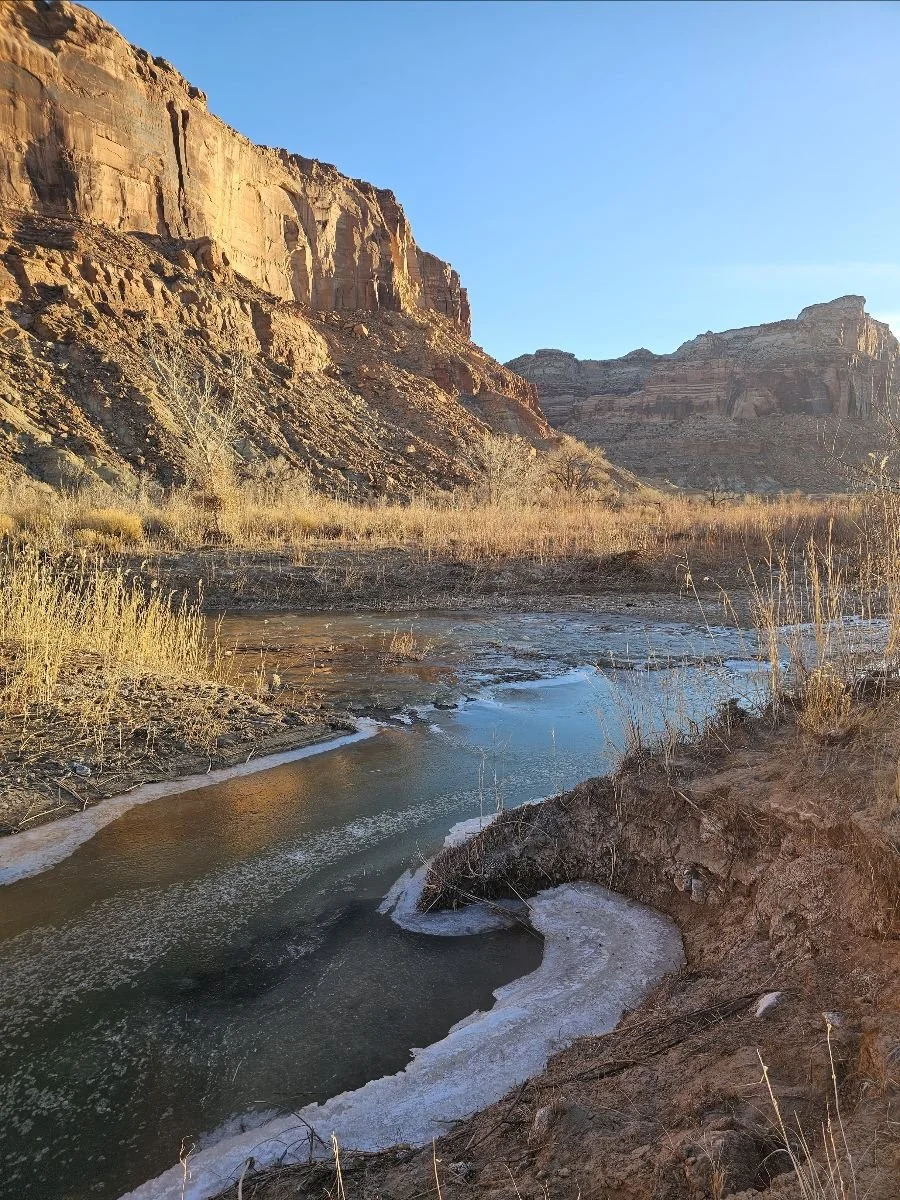
View from one of our wilderness campsites, San Rafael Swell, Utah.
I work full-time with teenagers in a wilderness therapy program in Utah. I work 8-day shifts at a time, and recently, my co-staff and I have been working with a 15-year old with a lot of childhood trauma. For anonymity, we’ll call him James. Abuse, neglect, abandonment—James has experienced it all. About a month ago, our shift started off pretty well as me and my staff team focused on building our relationship with James. We had some powerful conversations with him which led to valuable insights for us, and resulted in tears and emotional release for James as old wounds and limiting beliefs surfaced. We seemed to be making meaningful therapeutic progress, yet the week did not turn out the way we hoped. Instead, James hit rock bottom and it was painful to watch as he aggressively lashed out, pushed everyone away, and fell into a pit of self-loathing and isolation.
It often happens that when we experience emotional release and/or moments of intense vulnerability, sometimes there’s a recoil. Moments of truth and tenderness can lead to shelling up to hide and protect ourselves even more. We sometimes get worse before we get better. The wound always wants to have the last word. These cycles of expansion and contraction are a natural part of the healing and growth process, and they can be overcome through the support of loved ones, therapeutic tools, community, and the passage of time. Yet having this awareness doesn’t make it any easier when someone we care about is going through it. It is too easy to feel heartbroken, guilty, helpless, or powerless when someone we love is struggling or is in pain.
I returned home after this shift, and as much as I tried to put it past me, I spent days thinking about James, what I could have done or said differently, what I may have said or done that made matters worse, and whether or not he was okay out there in the southern Utah desert. I was weighed down by worry and concern.
This morning (as I write this), my husband Forest and I went to a local Buddhist sangha. We like to attend this Sunday service every now and then as it’s a welcoming and compassionate community. This Sunday, our teacher was sharing a Mahayana story about Avalokiteshvara (pron. Ava-Lo-Kih-TESH-Vara), the bodhisattva of compassion. Avalokiteshvara’s personal mission was to release all beings from suffering, and thus vowed to hear every cry and acknowledge every pain of the world. Eventually, he became overwhelmed with all the unending suffering of the world that he instead shattered into pieces. The Buddha came across the shattered Avalokiteshvara, gathered together all his pieces, and restored him to life and gave him eleven heads, and a thousand arms, each with an eye at the center of each palm. He did this so Avalokiteshvara would have a thousand eyes to see all the work that needs to be done in the world, and a thousand arms to carry out this work.
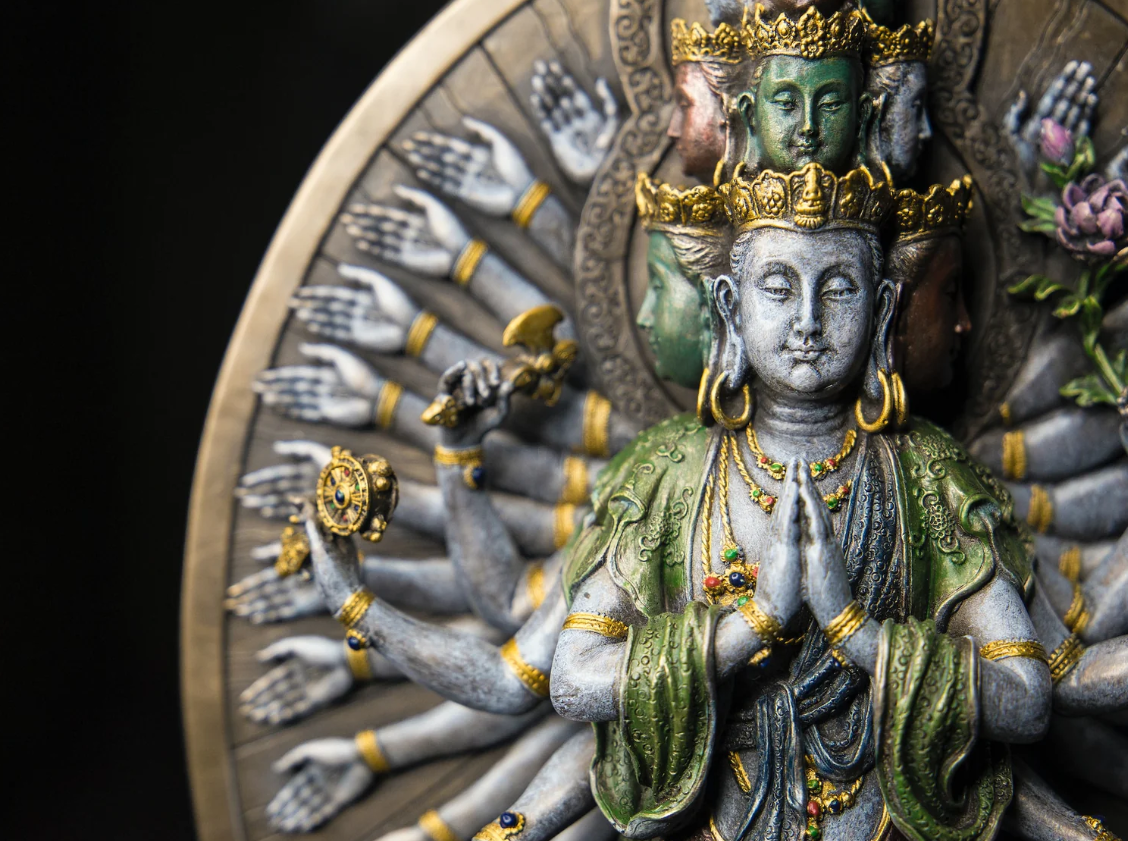
Avalokiteschvara. Photo by petr sidorov on Unsplash
Our teacher explained that we---humanity---are the thousand arms and thousand eyes of Avalokiteschvara. This bodhisattva of compassion is able to heal the suffering of the world through the love and presence each one of us is able to share.
I cried upon hearing this story. I feel just like Avalokiteshvara each time I return home from work. My heart shatters to pieces when I think of the boys who are still struggling, the trauma they’ve experienced, and the difficult journey of healing that still lies ahead of them. In this story, however, I was able to recognize that I may only have two arms, but together, we all have the ability to help. Each time I leave the boys behind in the wilderness, more staff fill my place—staff who have their own arms and eyes to provide care and support. Moreover, there are parents, family members, therapists, and other community members who are helping these boys too. What a relief to know that I am doing my best, and that I'm not alone. There are always others who are making a difference too.
I also think about Avalokiteschvara when I think about the wars that are taking place in the world right now. They have also weighed heavily on my heart. I feel guilty for not doing more, yet I know that I have my work cut out for me with my current job. I also realize now that there are many hands and eyes already out there, helping locally and overseas in every way they can.
When the tradition of the bodhisattva Avalokiteschvara reached China, he transformed into a feminine bodhisattva, whom many of you know as Kuan Yin, Mother of Compassion. The thousand-armed Kuan Yin is referred to as “She Who Hears The Cries Of World.”
Together, we are the hands, arms, and eyes of Avalokiteschvara and Kuan Yin, and in this way, we can hear every cry of the world, and acknowledge every pain.
I will carry Kuan Yin forward with me as a reminder that I do not have to hold—or heal—all the pain of the world. I’ll do what I can with these two hands, and leave the rest to each of you.
--——-
Update: Since writing this article, I have worked with James again. He is making progress, yet still struggles quite a bit. His journey very much looks like one step forward, three steps backward. Thus is the nature of trauma. I am learning to have patience with the healing process and to not have expectations for what it should look like or how fast it should happen. Each child is allowed to explore their life in their own way and at their own pace. I am discovering that one of the greatest acts of courage is to walk alongside another human being as they struggle, without trying to fix them or take their pain away. It may be the hardest yet most important thing we can do for someone we love. Our fully embodied presence communicates "Your experience is valid. I am with you. It is safe to feel."
